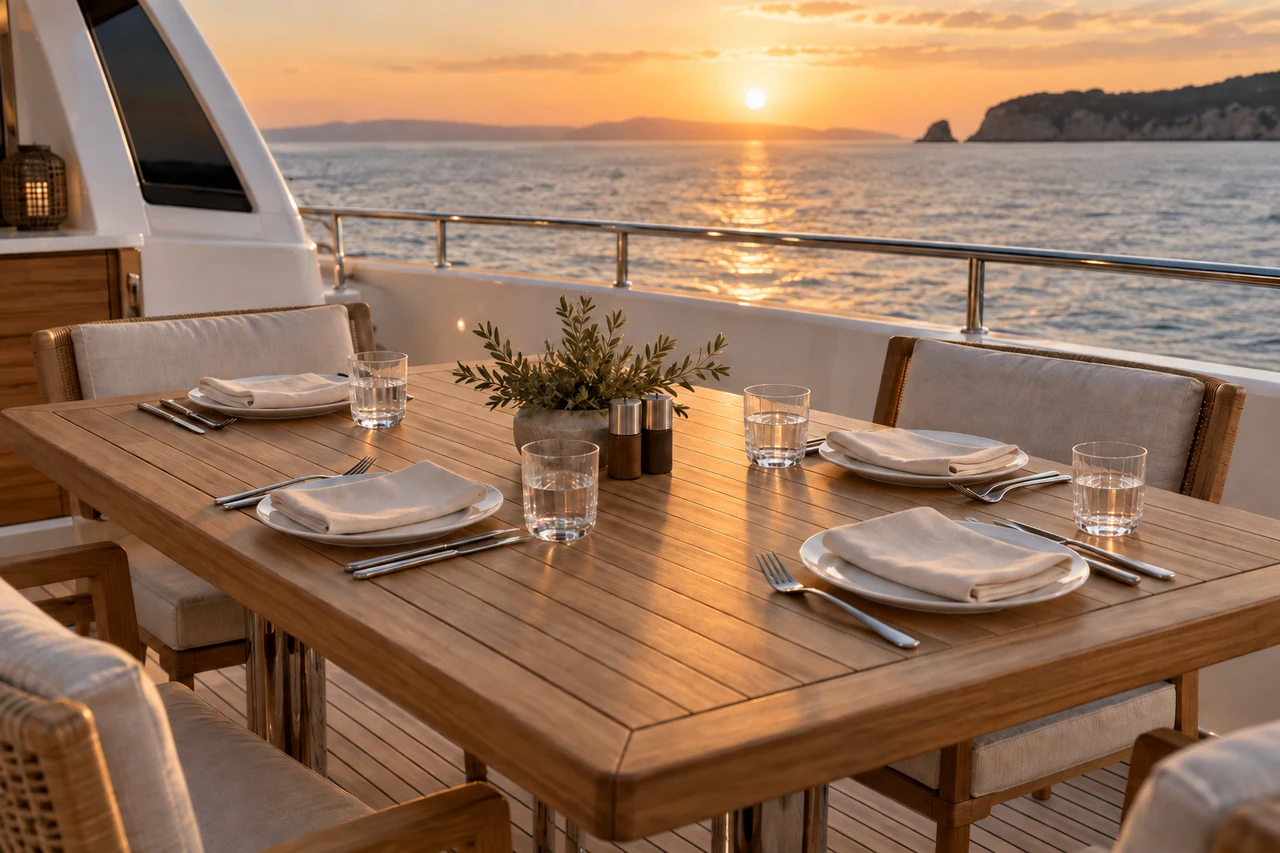
Check the table before the menu
Ask to see the dining arrangement on the actual yacht, including seating for your full group. A vessel may carry everyone without offering one table large enough for a seated dinner. Discuss whether you prefer outdoor dining or an enclosed saloon, and how the meal would move if conditions change. The answer should shape your yacht choice before flowers, table linen or other finishing touches.
Choose a practical style of service
Plated courses, sharing dishes and a buffet all need different space and preparation. State your preference, dietary requirements and any allergies when requesting the menu. Ask whether food will be prepared aboard or supplied by a caterer, who serves it and what drinks are included. These details help avoid a menu that looks appealing on paper but does not suit the pace of your evening.
Leave time to enjoy the cruise
Dinner need not occupy every minute on board. You may want photographs before sitting down or a quiet drink after the meal. Tell us which moment matters most, then let the proposed route and departure support it. The quote should state the charter period, food service and any optional touches separately, so you can adjust the evening without losing track of the complete cost.
Let the menu follow the conversation
Think about how formal you want the evening to feel. Several plated courses give the meal a clear sequence, while sharing dishes can suit a group that wants to talk and help themselves. A buffet has a different effect: people leave their seats, so the serving point needs to work with the dining space.
Discuss this before choosing individual dishes. Ask how much of the charter the meal is expected to occupy and whether the group eats together. A menu can be appealing on its own yet leave too little time for the part of the cruise you most wanted.
Keep photographs and table service from competing
If the waterfront view is part of the occasion, take the main group photographs before guests sit down or between agreed stages of the meal. Asking everyone to leave the table while food is being served makes the evening harder to coordinate. A brief running order can be enough.
Consider the table as a place to eat, too. Flowers, gifts and decorations should leave room for plates and conversation. If a photographer or musician will join, find out where they will work without taking the seats or passage needed by guests and the people serving dinner.
Describe the meal each guest needs
Collect food preferences once and pass them to the person responsible for the menu. Distinguish a personal preference from an allergy or other essential requirement, and let the caterer explain what can be accommodated. Do not rely on a guest discussing an important requirement for the first time during service.
For a mixed-age group, decide whether children will eat the same menu and at the same time. If some guests want a full dinner while others expect light refreshments, resolve that difference before requesting catering. It is much easier to design one coherent evening when everyone knows what the meal includes.